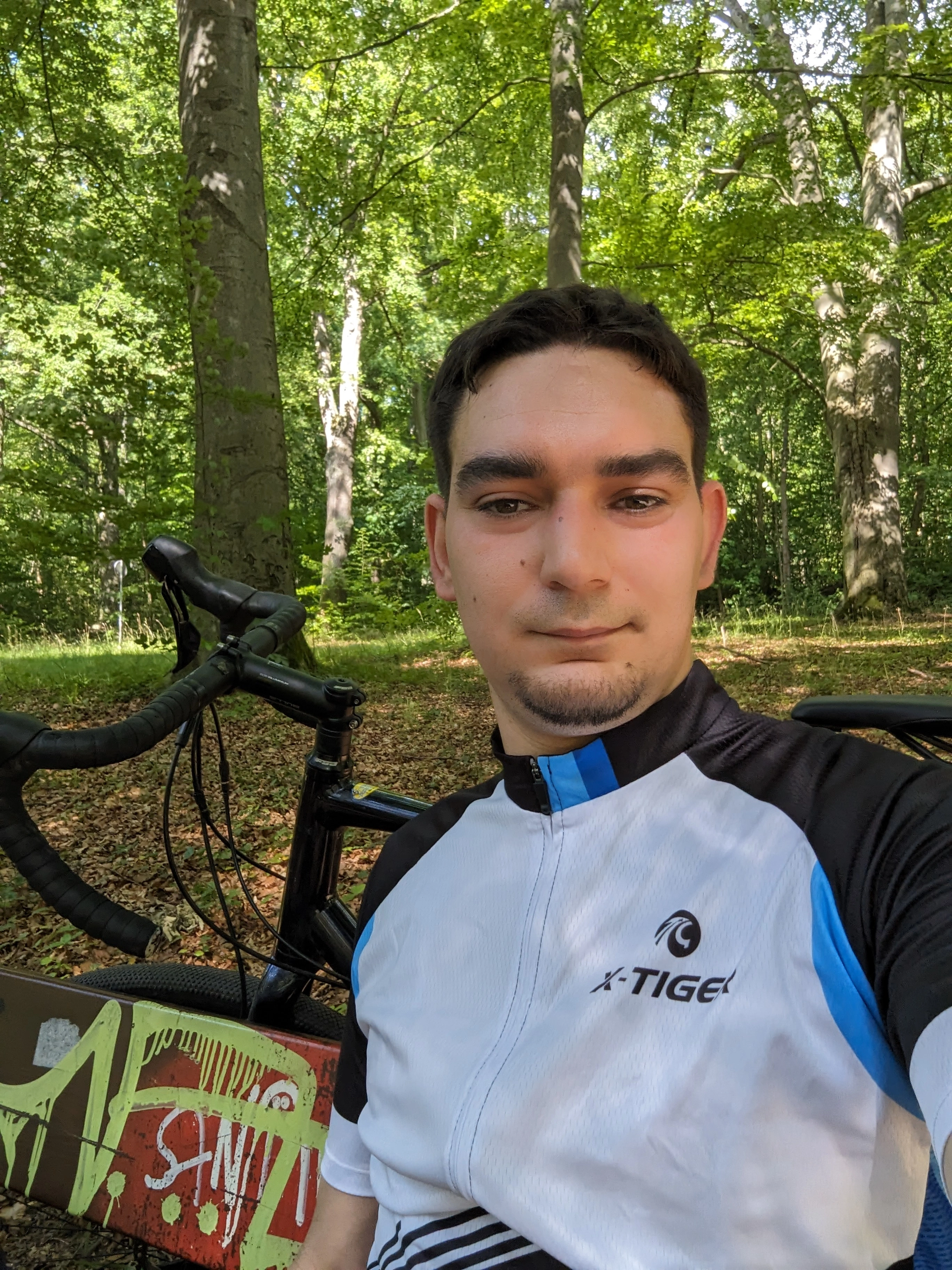
whoami

Head of Engineering.
Still commits code.

From Linguistics to Neural Networks

My way into technology began over a decade and a half ago and was a long detour. I started coding at 14 — side-projects, small experiments, some freelance websites, a Visual Basic order system for a friend's restaurant, a learning app for other students while I was working as tutor at university. The usual self-taught patchwork. But for years it stayed a clandestine hobby running alongside what I considered my real studies: language and cognition.

I studied Linguistics and Cognition, first in Bari and then in Göttingen, spending most of my twenties on questions about how human language works, synchronically and diachronically. It was in that academic context, of all places, that I built my first neural networks, inspired by Paul Smolensky's work on Gradient Symbolic Computation. Modelling phonological constraints with vector-space representations turned out to be the bridge.

I find the symmetry quietly satisfying. The languages I now spend my days working with are programming languages, but they are still languages. Most of what I learned about how meaning is built in human grammar transfers surprisingly well to how systems acquire meaning at scale.
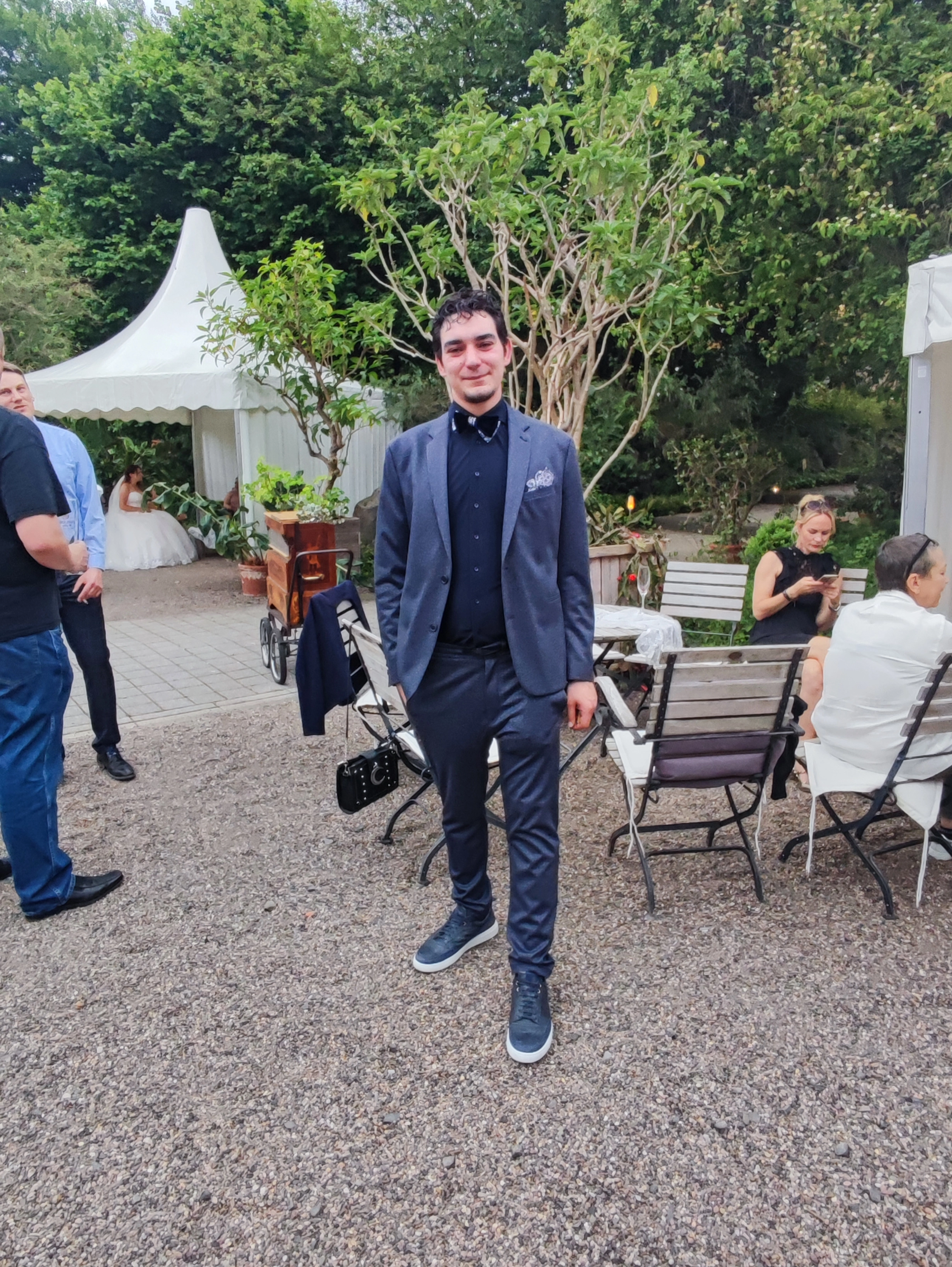
Academic research years
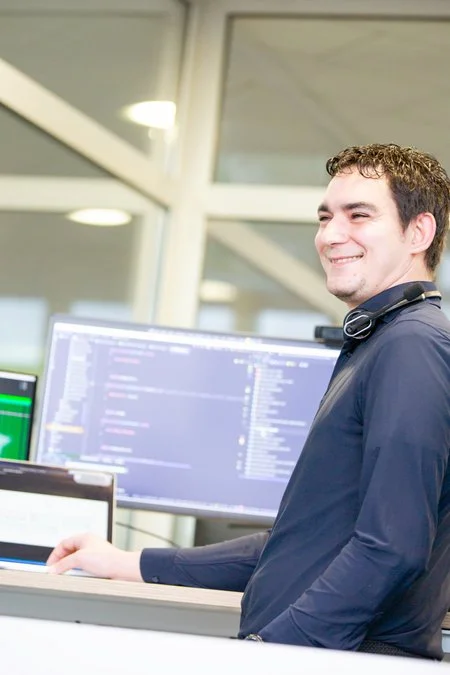
Cloud technologies and team leadership

A Winding Path to Tech Leadership

Before tech became my full-time profession, I worked across an oddly varied set of industries: tourism, sales, manufacturing, food service — often in some leadership capacity. Sweden's quiet efficiency, the friendly chaos of the Czech Republic, then Germany from 2015 onwards. Each environment added a layer.

I'm asked sometimes why it took me so long. The honest answer is that the human work was always the part that pulled hardest. Leading teams in kitchens, on shop floors, and in Wikimedia communities taught me something engineering-only careers don't always teach: that the substrate of any technical system is the social system around it.

From the First Engineer to a 40-person Org

The pandemic was the moment the two tracks merged. An unexpected offer came from Bikeleasing — become their first internal engineer. I joined a Mittelstand running on outsourced legacy systems with monthly outages, no documentation, and no tests. I am still grateful they took the bet.

Five years later I lead a 40+ engineering organisation across seven cross-functional teams. We rebuilt the platform on AWS — EKS with Terraform, event-driven backbones with Kafka, ArgoCD and GitOps, moved from a brittle monolith to forty-plus services, drove infrastructure cost down by more than a third, pushed critical SLOs to operational excellence. We took the tech function through ISO 27001 certification. We are now running the integration with our sister company, Probonio.

I still ship code. Not because the contribution matters at this scale, but because taste atrophies the second you stop touching the keyboard. Kotlin and TypeScript pay the bills; Rust is my weekend habit; Python and Bash for the glue layers.

From Code to Coaching, and Back Again

The weight of my role has shifted toward people. There is real satisfaction in growing engineers into Tech Leads or Team Leads, and watching a system run more confidently every quarter. I've also done the harder side of that work: probationary endings, mutual exits, performance turnarounds. Leaders who can't make those calls kindly are unfit for senior roles; leaders who can make them without empathy are unfit for any role.

The technical side never really left. I've spent the last year authoring the company-wide AI tooling strategy, designing the supporting infrastructure, and building multiple agent systems to increase team efficiency.

On AI in general: engineering leaders cannot afford to delegate AI judgement to anyone else on the team. Productive skepticism — the discipline of using these tools deeply enough to know where they break — is part of the job now. That skepticism has an operational edge too: AI may suggest the lines, but accountability belongs to whoever pushes the button. Never commit what you cannot explain or defend in a postmortem — fifteen words that have shaped how our teams work with AI in practice.

Cycling through the hills around Göttingen